DIKSHA: Each One Teach One
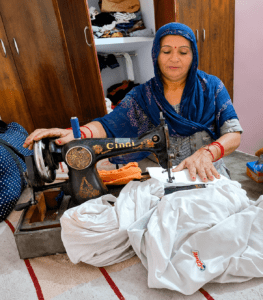
For years, 38-year-old Madhabi Devi of South 24 Parganas, West Bengal, avoided situations that required her to read in front of others. She could recognise a few letters and numbers, but could not read a bus destination board, a written instruction or a form.
Then her son came home from school with an unusual assignment. As a volunteer in India Humanity Foundation’s adult literacy programme, DIKSHA, built on the “Each One Teach One” principle, he had to teach one non-literate adult through 60 structured sessions.
He chose his mother.
At first, Madhabi was embarrassed that her own child was teaching her. But the lessons were designed around everyday life rather than memorisation—a name, a word, a number. Gradually, she began to read and write. She wrote her name unaided. She read a full sentence aloud to her family for the first time.
Her son, meanwhile, learned something that a classroom rarely teaches directly: patience, responsibility and how to explain something until it is understood.
VIDYA: Literacy Centres That Empower Adults to Read and Write
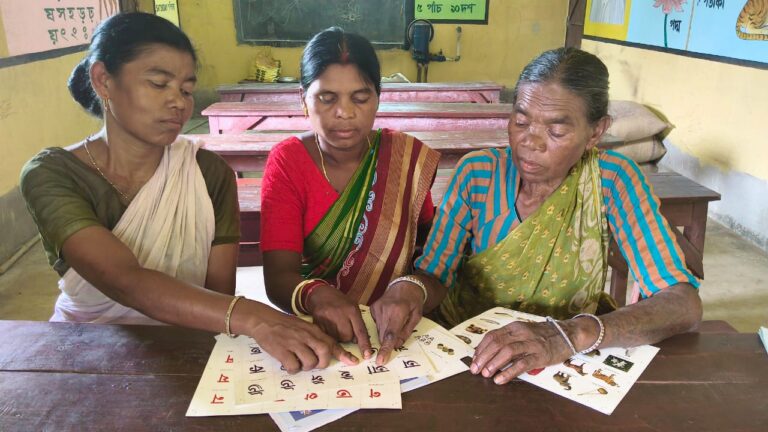
Four hundred kilometres away, in tribal Purulia, Saraswati Kumari had a different starting point. Married young and never having attended school, the mother of three could not help her children with their homework or read school notices. Even travelling alone was difficult because she depended on others to read signs for her.
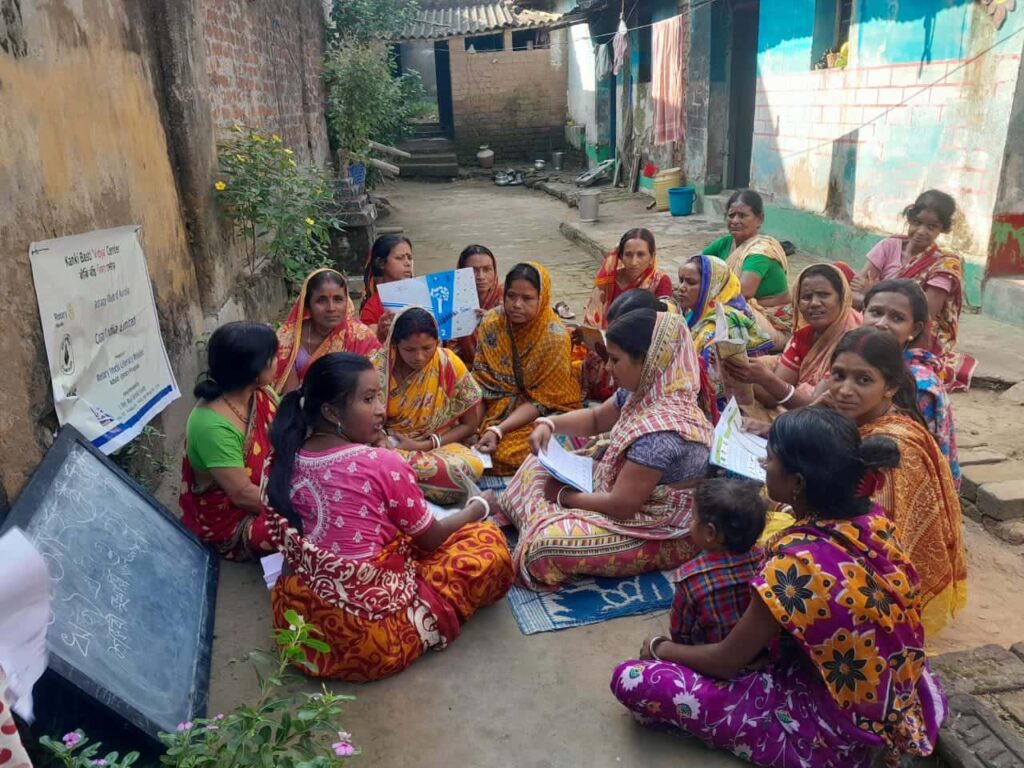
Saraswati was hesitant when she first joined a literacy class at an India Humanity Foundation VIDYA centre in her village. She was one of 40 learners at the centre.
After 60 sessions, the learners were reading sentences, doing simple calculations and, for many, achieving something that had once seemed out of reach: signing their own names.
Saraswati is one of 1,150 tribal women reached through the programme in Purulia. Similar VIDYA centres are also operating in Odisha, Rajasthan and Jharkhand.
A Simple Model, Designed to Repeat
DIKSHA and VIDYA are two models through which India Humanity Foundation is pursuing its mission of Making India Totally Literate.
The approach is deliberately simple. IHF has developed vernacular toolkits that make lessons practical, engaging and relatable for adult learners. Progress is tracked through a mobile-app-linked literacy portal, while certificates are awarded to learners, volunteers and participating schools.
The stated cost is just ₹600 to make one adult literate.
There is no need for new land, construction or a new institution. The model requires a toolkit, a structured curriculum and someone willing to teach.
That low-cost design is what has allowed the programme to travel. It has operated through thousands of student volunteers and partner NGOs across 22 Indian states, reaching more than 4,00,000 adults. In West Bengal, the programme has also reached all 61 correctional homes, where inmates have taught more than 3,000 fellow inmates to read and write.
The design is deliberately unglamorous. It does not depend on a handful of extraordinary teachers. It depends on thousands of ordinary ones—a school student, a community facilitator, an inmate—each taking responsibility for one or a few learners.
A model built around ordinary people and repeated often enough is what scale can look like.
Beyond Literacy: Restoring Dignity
The impact of literacy extends beyond the ability to read and write. For adults who have spent years depending on others to interpret a form, a signboard or a written instruction, literacy can bring a measure of independence to everyday life.
It can also influence the next generation. A parent who can engage with a child’s schoolwork, read a school notice or understand written communication is better placed to participate in that child’s education. Literacy can therefore become a bridge between generations—not just an individual skill.
Madhabi Devi and Saraswati Kumari are two names among four lakh.
That is precisely the point.
The model was never designed around either woman alone. It was designed so that the next village, the next correctional home, the next CSR programme, or another organisation can adopt it without waiting for new infrastructure.
With millions of adults still lacking basic literacy, the scale of the challenge demands solutions that can travel as easily as the problem does. India Humanity Foundation’s approach is built around that premise: make literacy simple enough to teach, affordable enough to replicate, and structured enough to carry from one community to the next.
India Humanity Foundation (IHF), founded by Shekhar Mehta, is a registered nonprofit working across literacy, health, disaster management, water and environment, hunger alleviation, and girls’ empowerment. To know more, visit www.ihf.org.in