
In 2021, a young man who had grown up twenty feet from Mumbai’s largest open drain opened a learning centre in a Pune settlement. Sayed Mohammad Shoeb had been the first in his family to graduate, earning a degree in chemical engineering, and had then joined Teach For India as a Fellow. In his classroom, he met children living the life he had left behind: curious, capable, and trapped within systems that gave them almost no chance. Panaah Communities began there, in one room, in a neighbourhood most of the city drives past.
Five years later, Panaah works across seventeen sites. What is worth noticing is not the number, but how it grew.
Panaah runs its centres inside the settlements where its team lives. Families in these communities typically comprise four to six people living on ₹15,000 to ₹25,000 a month, often on a single income—a pattern that has persisted across two or three generations. The organisation runs two tracks in parallel because children in the same lane are often at very different starting points. One is for children who are years behind, taught at the level they are actually at rather than the grade they sit in, and then supported through to their first employment. The other is for academically oriented children being prepared for the top STEM institutions in India and abroad.
Both tracks produce results that can be independently checked. Ninety out-of-school children have returned to formal schooling. In national and international competitive examinations last year, 23 Panaah scholars ranked among the top 1,000 globally in the Unified International Mathematics Olympiad, 59 ranked among the top 2,000 in the National Science Olympiad, and 17 qualified for the VSSF SPOT100. These children entered the year scoring below the national average on Ei ASSET. They are not exceptions who were singled out. They are ordinary children from municipal schools who were taught.
Then something happened that Panaah did not arrange.
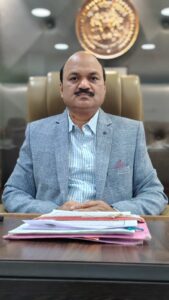
Officials from the Pune Municipal Corporation came to see the centres. They watched the classes. And then PMC invited Panaah into six of its own school buildings, offering the space at no cost, to run the programme after school hours for its own children. Around the same time, Zilla Parishad schools in Mahabaleshwar opened four more buildings for a literacy programme run on the same principles.
Panaah did not knock on those doors. That distinction is the whole story, because it is the difference between a good programme and a transferable one.
The model transfers because it depends on nothing scarce. The teachers are women from the same settlements, recruited and trained locally, rather than specialists brought in from outside. The classrooms are buildings the state already owns and already pays for. There is no new infrastructure to fund, and no talent bottleneck waiting at the hundredth school.
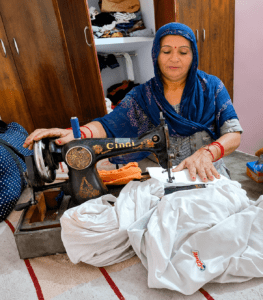
This is also what transformation from within looks like when it stops being a phrase. A woman from the settlement teaches the children of the settlement, in the settlement’s own school. Children who are years behind are taught by someone who understands why they fell behind. Children with real ability are prepared for institutions no one in their family has entered. The people delivering the change and the people receiving it are the same community.
Panaah’s own strategy names the ambition plainly. Rung One is what Panaah delivers. Rung Two is what the city delivers, with Panaah’s model running inside it. Everything being built now is being built to be handed over.