India’s fight against malnutrition is often measured in numbers. But behind every statistic is a child struggling to concentrate in class, a mother battling constant fatigue, or a family caught in the cycle of poor nutrition and poverty.
Iron deficiency anemia (IDA) remains one of India’s most persistent public health challenges. More than 67% of children under five and 57% of women of reproductive age suffer from anemia, affecting cognitive development, immunity, academic performance, productivity and maternal health. While iron supplements and fortified foods have helped, challenges such as poor compliance, side effects and limited access, particularly in rural and tribal communities, continue to hinder lasting progress.
Millets Now believes the solution lies not in changing what people eat, but in making everyday food naturally more nutritious.
Its flagship initiative, Nutri Pathshala, demonstrates how locally grown, culturally accepted foods can become a sustainable answer to one of India’s biggest nutrition challenges.
Reimagining Nutrition Through Food
At the heart of Nutri Pathshala is Nutri Dabba, a scientifically formulated, ready-to-eat nutrition kit made from biofortified, iron-rich pearl millet.
Unlike conventional interventions that rely heavily on tablets or industrial fortification, Nutri Dabba follows a food-first approach. The products are prepared using climate-resilient pearl millet with high iron bioavailability and processed through a patented Hydro-NIR technology, which extends the shelf life of millet flour from just 15 days to nearly six months—without the use of preservatives.
The result is a nutritious, locally acceptable food that is easy to distribute, enjoyable for children to consume and practical to scale across communities.
A Community-Owned Nutrition Ecosystem
Nutri Pathshala is more than a nutrition programme, it is a decentralised food system that strengthens local economies while improving public health.
Implemented in Pune, Maharashtra, the initiative brings together every stakeholder in the nutrition value chain.
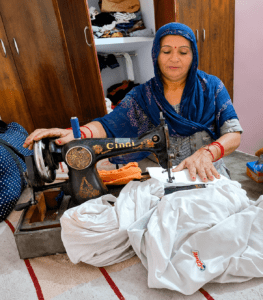
State Agricultural Universities provide biofortified pearl millet seeds, enabling smallholder farmers to cultivate nutrient-rich crops using improved agricultural practices. Farmer Producer Companies aggregate the harvest, while women-led Self-Help Groups undertake value addition by producing a range of iron-rich food products.
These include laddus, nutrition bars, cookies, chiwda and malt-based beverages—foods designed around local tastes and eating habits to encourage regular consumption among schoolchildren.
The products are then supplied to schools three times a week, ensuring children receive consistent, food-based nutritional support.
By building nutrition systems within communities rather than importing solutions into them, the programme creates local ownership and long-term sustainability.
Tackling Multiple Challenges with One Solution
The impact of Nutri Pathshala extends well beyond improving haemoglobin levels.
By creating demand for biofortified millets, the initiative provides smallholder farmers with better market opportunities while promoting climate-resilient agriculture. At the same time, women-led Self-Help Groups generate livelihoods through food processing and distribution, strengthening household incomes and community entrepreneurship.
The programme therefore addresses three interconnected challenges simultaneously:
- Reducing iron deficiency anemia among children.
- Improving incomes for smallholder millet farmers.
- Creating sustainable livelihoods for rural women.
This integrated approach demonstrates how nutrition programmes can also become engines of rural development and economic empowerment.
From Evidence to Practice
Nutri Pathshala challenges the conventional belief that anemia can only be addressed through supplements and industrial food fortification.
Instead, it presents a scalable, decentralised model rooted in locally grown foods, community participation and scientific innovation.
The initiative combines agricultural research, nutrition science, women’s entrepreneurship and school-based delivery into a practical framework that communities can own and sustain. It transforms iron-rich millets from an underutilised crop into a powerful public health intervention while preserving local food cultures and reducing dependence on centralised supply chains.
Nourishing Futures, One Meal at a Time
The fight against anemia is ultimately about giving every child the opportunity to learn, grow and thrive.
When children receive nutritious food consistently, they attend school with greater energy, perform better academically and build healthier futures. When farmers gain reliable markets for nutrient-rich crops, rural livelihoods improve. When women become producers rather than beneficiaries, communities become more resilient.
Nutri Pathshala demonstrates that some of India’s most complex challenges can be addressed through solutions that are both innovative and deeply rooted in local realities.
By placing communities at the centre of nutrition, Millets Now is showing that the path to a healthier India begins not in a laboratory, but on farms, in village kitchens and inside school classrooms, one nutritious meal at a time.